
dha city farmhouses, dha city islamabad, dha city
The growing allure of owning a farmhouse in DHA City Islamabad stems from the promise of spacious living amidst greenery, away from the pressures of urban life. However, as the region’s population swells and environmental concerns intensify, water sustainability has become a critical issue. This reality check examines whether DHA City famhouses and water resources are sufficient to meet the agricultural and domestic needs of its expanding farmhouse community, while considering Islamabad’s broader water challenges.
Islamabad, once celebrated for its ample natural resources, is now grappling with a severe water scarcity crisis. Recent reports from the Pakistan Council of Research in Water Resources (PCRWR) show that demand for water in the capital has far outpaced supply. The city’s population has surged, and as a result, its water requirements have exceeded the capacity of existing resources.
Demand estimates for Islamabad in 2025 range from 125 MGD to over 280 MGD. The actual water supply remains between 62 to 74 MGD. The gap has led to water rationing, affecting urban residents and suburban developments like DHA City farmhouses. Despite efforts to increase supply, the water shortage worsens due to climate change, infrastructure deficits, and groundwater overuse.
Rawal Lake, Islamabad’s main source of water, has seen fluctuating water levels in recent years. The increasing reliance on groundwater has raised concerns about the rapid depletion of the region’s aquifers. Groundwater levels have dropped significantly due to excessive extraction, making it an unsustainable long-term solution.
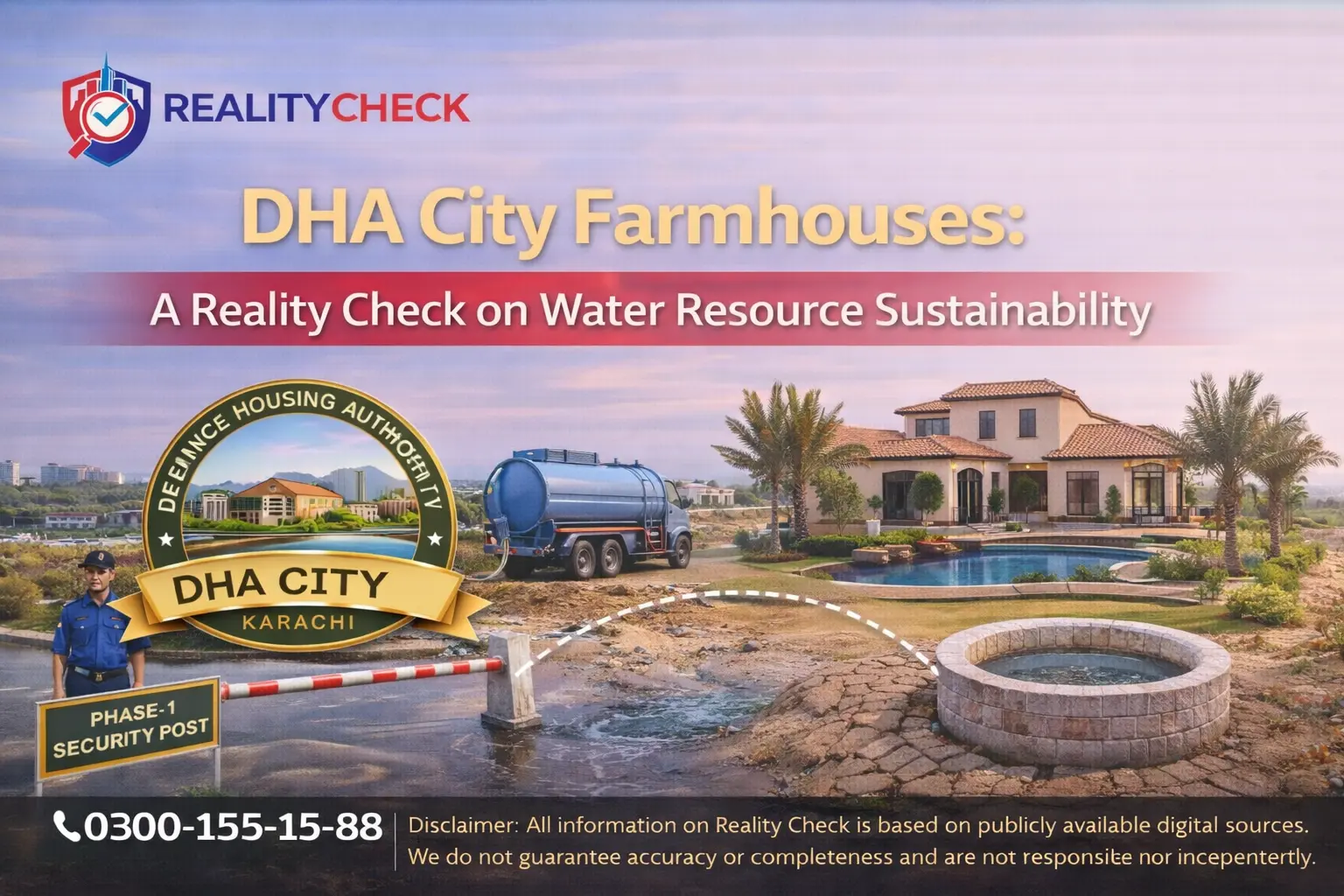
DHA City has been marketed as a desirable location for buyers looking for green spaces and a peaceful environment. However, this comes with a significant water demand challenge. Each farmhouse requires substantial water not only for domestic use but also for maintaining gardens, landscaping, and running irrigation systems. As many farmhouses are located on large plots, the water consumption per property is considerably higher than in urban homes.
To address the inconsistent supply, developers recommend homeowners install boreholes and water storage tanks to manage their water needs. However, this reliance on private water sources raises concerns over the sustainability of groundwater use in an already stressed system. Excessive dependence on borewells could accelerate the depletion of aquifers, worsening the city’s water crisis.
Despite DHA City’s modern infrastructure, water availability remains erratic. The local authorities have struggled to keep pace with the growing demand for water due to rapid urban expansion. The Ghazi Barotha Water Supply Project, which could potentially provide 600 MGD to the region, has faced significant delays, and its completion remains uncertain. The lack of timely infrastructure development has prevented the project from alleviating the water crisis in areas like DHA City Islamabad.
Recent reports also highlight that despite the construction of new reservoirs, climate change and overuse of existing freshwater resources could make these projects inadequate in the long term. This underscores the urgency for sustainable solutions.
To address the ongoing challenges, several potential solutions have been proposed. Experts recommend rainwater harvesting as a viable strategy to reduce reliance on groundwater. The Capital Development Authority (CDA) has already started implementing rainwater harvesting systems in parts of Islamabad to ease pressure on local water resources.
Another proposed solution is the introduction of efficient irrigation systems and wastewater recycling. These practices can significantly reduce water usage, making them essential components of sustainable living in DHA City. Additionally, smart water management systems could be implemented to track water usage, ensure efficient distribution, and minimize wastage. However, such technologies are still in the early stages of implementation, and the scale of their deployment across all properties in DHA City remains uncertain.
For DHA City and similar developments in Islamabad to ensure water sustainability, policy reforms are necessary. Experts argue that Islamabad’s water policy requires comprehensive reform to address the challenges posed by rapid urbanization. This includes investing in new water supply projects, such as the Ghazi Barotha project, and implementing stricter regulations on groundwater usage.
The Islamabad Water Supply and Sewerage Authority (IWASA) must ensure sustainable water extraction and meet future demand. Government initiatives to promote sustainable farming and water-efficient landscaping in suburban areas could help ease pressure on water resources.
In conclusion, DHA City Islamabad offers an attractive investment, but the sustainability of its water resources is a concern. Buyers should consider not just the property’s cost but also the long-term viability of the water supply. Without effective water management and infrastructure investment, DHA City may face challenges as water demand rises. For DHA City and similar developments to thrive in the future, a focus on integrated water management, sustainable practices, and efficient urban planning is essential. Only by addressing these challenges can DHA City continue to offer a thriving, sustainable community to its residents.