

KDA
Introduction
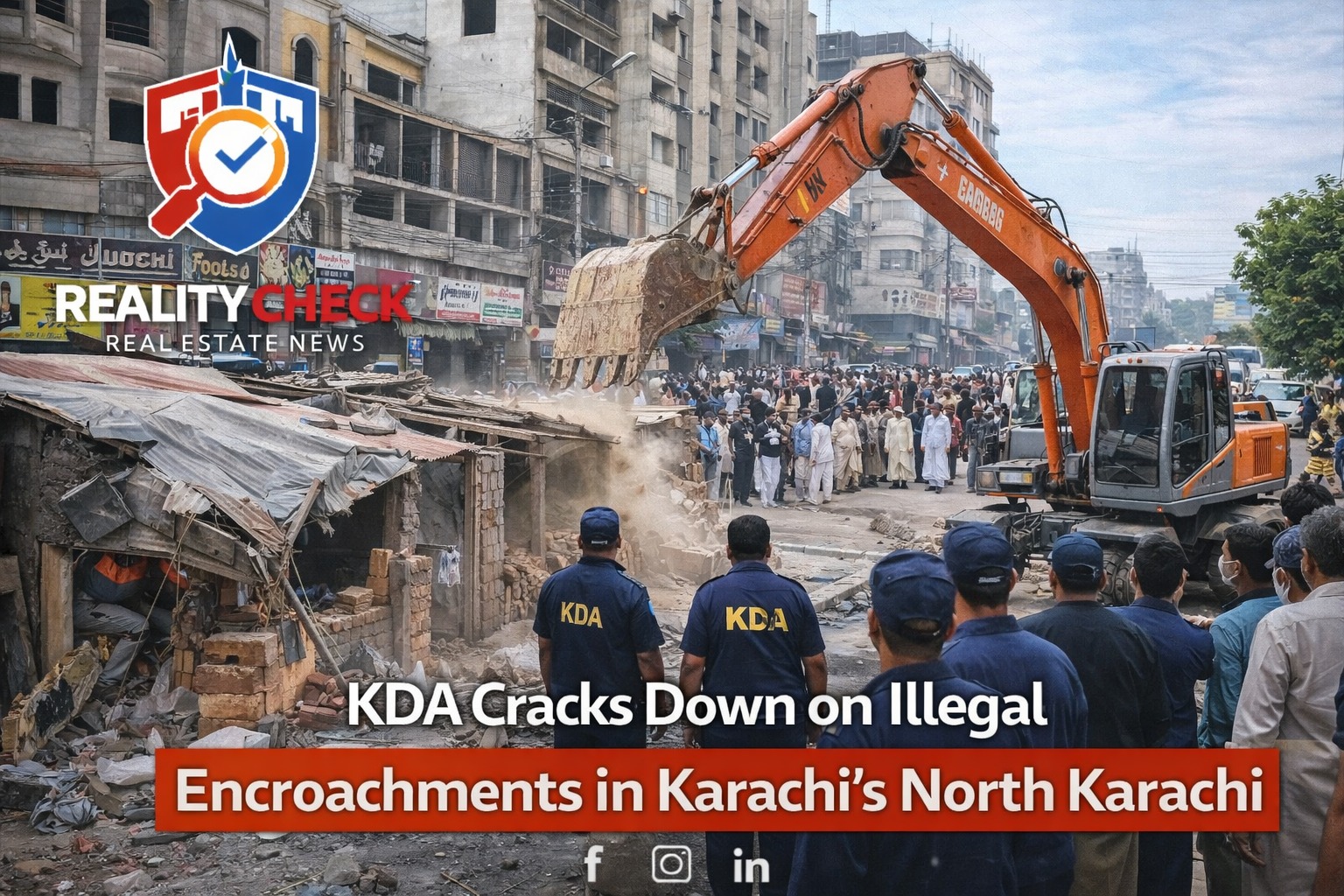
The Karachi Development Authority (KDA) has launched a robust operation to eradicate illegal encroachments in North Karachi, particularly in sector 6B. This move reflects the authority’s commitment to reclaiming government land and ensuring orderly urban development in one of Pakistan’s busiest metropolitan areas. The crackdown targets illegal factories and commercial establishments that have sprung up on public land, disrupting community planning and leading to infrastructural challenges.
Background of the Encroachment Issue in Karachi
Karachi, as Pakistan’s largest city and economic hub, faces myriad urban challenges. Over the years, illegal encroachments have escalated dramatically due to population pressure, unplanned migration, and inadequate enforcement of land-use regulations. North Karachi has become a hotspot for unauthorized construction and illegal occupation of government land. These encroachments not only violate municipal laws but also hinder the provision of essential services like roads, utilities, and emergency access.
The sprawling network of illegal factories in sector 6B exemplifies the broader issue of encroachments in the city. Many such structures operate without proper licenses or adherence to zoning regulations, posing environmental hazards and contributing to traffic congestion. These illegal entities often exploit loopholes and weak enforcement, significantly undermining Karachi Development Authority’s planning efforts.
KDA’s Enforcement Strategy
Recognizing the urgent need to address the problem, the Karachi Development Authority has intensified its enforcement activities. The recent operations in North Karachi represent a clear message to all violators that illegal occupation of public land will not be tolerated. The KDA enforcement team coordinated closely with local police to carry out well-planned demolition drives against unauthorized factories and structures.
The operation involved detailed surveys, identification of encroached areas, and collaboration with law enforcement to ensure the safety and legality of the demolition process. The reclaimed land will be restored for legitimate urban development projects, public amenities, and infrastructure expansion. The KDA’s approach balances legal compliance with community sensitivities, aiming to foster trust among residents while maintaining the rule of law.
Impact on North Karachi and Community
The crackdown on North Karachi encroachments is expected to bring significant positive changes to the sector and its inhabitants. Reclaiming government land allows for timely infrastructure development, including improved roads, drainage, and public spaces. This enhancement will support better living standards and facilitate smoother commercial activities compliant with city planning.
In addition, removing illegal factories reduces environmental pollution and safety risks associated with unregulated industrial activities. Residents can anticipate cleaner neighborhoods and reduced traffic blockages. The crackdown also sets a precedent, deterring future illegal encroachments and promoting adherence to official regulations.
Challenges Faced by KDA
While the enforcement drive is a critical step forward, the Karachi Development Authority faces several challenges in completely resolving the encroachment crisis. Resistance from encroachers, legal hurdles, and the socio-economic realities of those dependent on unauthorized structures complicate the process. Many occupants are involved in informal economic activities and may lack alternative livelihoods, necessitating a sensitive and multi-faceted response.
Moreover, continuous vigilance is required to prevent re-encroachment. The KDA must strengthen monitoring mechanisms, digitize land records, and enhance community outreach to promote legal land use. Cooperation from other government agencies and civic bodies is also essential to create an integrated framework for sustainable urban development.
Future Outlook
The KDA’s proactive measures against illegal encroachments in North Karachi signal a transformative phase in managing urban land use in Karachi. Sustained enforcement combined with policy reforms and public awareness campaigns can gradually restore order and foster equitable development.
To complement demolition drives, the government could consider providing affordable housing options and vocational support to informal sector workers displaced by such operations. This holistic approach would minimize socio-economic disruption and create more resilient urban communities.
Furthermore, embracing technology-driven solutions, such as Geographic Information Systems (GIS) for real-time monitoring, can enhance enforcement capabilities. Transparent reporting and stakeholder engagement will also help build public confidence in regulatory institutions.
Conclusion
The Karachi Development Authority’s crackdown on illegal encroachments in North Karachi is a decisive step to reclaim public land and improve urban governance. The KDA is dismantling illegal factories and enforcing zoning laws to restore order in sector 6B and across the city. Despite ongoing challenges, coordinated enforcement efforts show the commitment to building a strong foundation for sustainable city planning and community well-being.
As Karachi grows, authorities must enforce laws against illegal encroachments and support them with inclusive policies to create a livable, thriving urban environment.